How to choose
Choosing a tent and sleeping bag for Canadian shoulder-season nights
Pick the bag from the coldest night, not the average one. What the label on a Canadian tent must carry, and why nothing that burns fuel goes inside it.
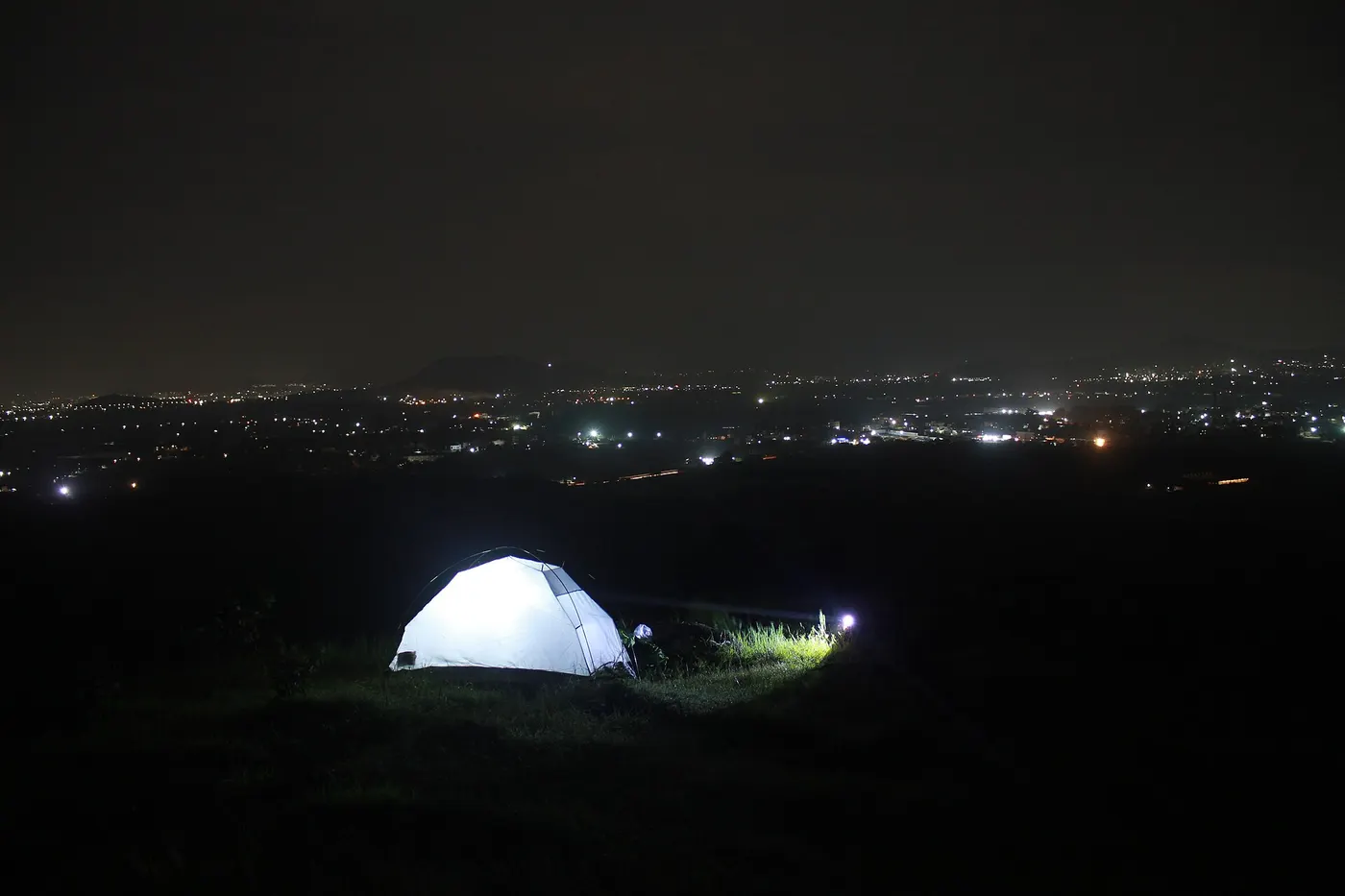
A shoulder-season trip in Canada is a cold-night problem wearing a mild-afternoon disguise. The daytime temperature sells the trip and the overnight low decides whether anyone sleeps, and those two numbers can be 15 degrees apart on the same September day.
This guide takes the decision in the order the night takes it: what the conditions will actually be, what the tent label is required to tell you, how a bag rating works as part of a system, and the one rule about fuel that has no exceptions. Nothing here has been field-tested by this site; every claim is either public regulation or arithmetic you can repeat.
Start from the coldest night, not the trip average
Environment and Climate Change Canada publishes a wind chill index that converts air temperature and wind speed into a single figure, and it attaches explicit exposure consequences to the bands. At wind chill values of -28 to -39, exposed skin can freeze in 10 to 30 minutes. From -40 to -47 that falls to 5 to 10 minutes, from -48 to -54 to 2 to 5 minutes, and below -55 to under 2 minutes.
Those bands matter for gear choice because the wind chill index chart runs from air temperatures of 0°C down to -50°C at wind speeds between 10 and 60 km/h, and a windy night at a modest air temperature lands in the same band as a still night that is far colder. A tent that does not block wind moves you up that table whatever the thermometer says.
The planning move is to find the lowest overnight temperature you can realistically meet on the dates you are going, then add a margin rather than matching it exactly. A margin of about 5 degrees below the expected low is the assumption used throughout this guide; it is a planning choice, not a published rule.
| Wind chill value | Risk level | Exposed skin freezes in |
|---|---|---|
| 0 to -9 | Low | Slight increase in discomfort only |
| -10 to -27 | Moderate | Risk over long exposure without protection |
| -28 to -39 | High | 10 to 30 minutes |
| -40 to -47 | Very high | 5 to 10 minutes |
| -48 to -54 | Severe | 2 to 5 minutes |
| -55 or colder | Extreme | Less than 2 minutes |
These are the published bands, not a calculation. The index itself is computed from air temperature and wind speed; the chart covers 0°C to -50°C and 10 to 60 km/h.
What the label on a Canadian tent has to carry
Tents sold in Canada are regulated. The Tents Regulations, SOR/2024-217, were registered on 8 November 2024 and require tents to meet the safety standard CAN/CGSB-182.1-2020, Flammability and labelling requirements for tents, including the labelling requirements set out in that standard.
These replaced an older set of regulations dating from 1988 that referenced the American CPAI-84 specification. Health Canada's own consultation material explains why the rules exist at all: between 1972 and 1987 Canada recorded 32 deaths and 40 injuries from tent fires, more than half of them involving children.
The practical check at the point of purchase is a short one. Look for a permanent label on the tent itself rather than on the packaging, confirm it carries the fire-safety wording in both English and French, and keep it attached. A tent with no permanent label is a tent that cannot demonstrate it meets the standard.
- A permanent label sewn into the tent, not a hang tag on the packaging
- Fire-safety wording present in both English and French
- A reference to the flammability standard the tent is certified against
- Pole and fly materials named, so replacement parts can be matched later
- A model and batch identifier you can search against the national recalls register
A sleeping bag rating is a system, not a number
A bag's rating describes the bag in a laboratory on a standard pad, with a sleeper in a base layer. On the ground, the pad underneath you is doing between a third and a half of the work, because compressed insulation under your body has almost no loft left to trap air.
That makes the pad the first thing to upgrade when a bag underperforms, not the bag. A bag rated for the night but used on a thin foam pad will feel several degrees colder than its label; the same bag on an insulated pad will feel close to it. A liner adds a further small margin and costs a fraction of either.
Fill type decides what happens when the system gets wet rather than how warm it is when dry. Down is lighter and packs smaller for the same warmth; synthetic keeps more of its loft when damp and dries faster. On a Canadian shoulder-season trip with condensation inside the tent every morning, that difference is the one that shows up.
| Coldest night you expect | Bag rating to look for | Pad | Liner |
|---|---|---|---|
| +10°C | +5°C or lower | Uninsulated is adequate | Optional |
| +5°C | 0°C or lower | Insulated | Optional |
| 0°C | -5°C or lower | Insulated | Worth adding |
| -10°C | -15°C or lower | Insulated, used double if thin | Yes |
The second column applies this guide's 5-degree planning margin to the first. The margin is an assumption made here, not a figure from any standard.
Nothing that burns fuel goes inside the tent
Health Canada's guidance on preventing carbon monoxide exposure is a single sentence with no exceptions: never operate outdoor equipment that uses fuel, charcoal or wood inside a home, vehicle, garage or shed, camper or tent. That covers camping stoves, lanterns, charcoal, and any heater not specifically designed for indoor use.
Carbon monoxide has no smell, no colour and no taste, which is why the rule is absolute rather than conditional on ventilation. A partly open vestibule is not ventilation in any sense the gas recognises, and a stove run inside a vestibule is a stove run inside the tent.
This has a direct effect on what you buy. If you want to cook under shelter in rain, the item that solves it is a separate tarp or a vestibule large enough to stand the stove outside the tent body, not a smaller stove. Budget for the tarp rather than planning to break the rule.
Sizing: a two-person tent is a one-person-and-gear tent
Tent capacity numbers describe sleeping mats laid edge to edge with nothing else inside. Work it out in square metres instead. A floor measuring 220 cm by 130 cm is 2.86 m², which is 1.43 m² each for two people including everything they are carrying.
For a trip where the pack has to come inside — rain, insects, or wildlife rules that keep food out but gear in — one person in a two-person tent is the comfortable configuration, and two people want a three-person floor. Going up one capacity size typically costs under $100 and adds a few hundred grams, which is a small price against three wet nights.
Packed size is the number that decides whether the tent actually travels. Measure the stuff sack against the pack it has to go inside before buying, not after, and remember that poles and fly often pack separately once the tent has been used a few times.
Before you buy
- Look up the lowest overnight temperature realistic for your dates, not the daily average
- Add about 5 degrees of margin to that figure before choosing a bag rating
- Budget for an insulated pad in the same purchase as the bag
- Check the tent carries a permanent bilingual fire-safety label sewn into the tent itself
- Measure the tent's packed stuff sack against the pack it has to fit inside
- Work out the floor area in square metres per person rather than trusting the capacity number
- Plan to cook outside the tent in every weather, and buy a tarp if that worries you
Questions readers ask
- Can I use a summer bag with extra clothing instead of buying a colder one?
- Up to a point, and the point is loft. Extra layers help until they compress the bag's insulation against your body, after which they make things worse. A dry base layer, a hat and dry socks add a genuine few degrees; a thick jacket inside a snug bag usually does not. The pad underneath is where the same money buys more.
- Why can a 0°C night feel colder in one tent than another?
- Wind and condensation. A tent that lets wind move through the sleeping area puts you into a higher band on Environment and Climate Change Canada's wind chill table even though the air temperature has not changed. A tent that traps moisture wets the outside of your bag, and damp insulation loses loft, which is the mechanism behind most cold nights that the thermometer cannot explain.
- Is a four-season tent necessary for autumn camping in Canada?
- Usually not. The thing four-season tents add is the ability to carry snow load and shed strong wind, which costs weight and reduces ventilation. For September and October nights above freezing, a well-pitched three-season tent with a full fly and a groundsheet is the better trade, because condensation is the problem you will actually meet.
- What does the tent label requirement actually protect against?
- Fire. The Tents Regulations registered on 8 November 2024 require tents to meet CAN/CGSB-182.1-2020 for both flammability and labelling, and the permanent bilingual label carries the fire-safety wording. The older rules were introduced in 1988 after Canada recorded 32 deaths and 40 injuries from tent fires between 1972 and 1987.
Sources
- Tents Regulations (SOR/2024-217), registered 8 November 2024, incorporating CAN/CGSB-182.1-2020 — checked 2026-11-03
- Environment and Climate Change Canada — wind chill and the Wind Chill Index, risk bands and freezing times — checked 2026-11-03
- Health Canada — carbon monoxide: preventing exposure — checked 2026-11-03
- Health Canada — notice to interested parties on amending the Tents Regulations (1972 to 1987 tent fire record) — checked 2026-11-03
Some links on this site can earn us a commission. That does not change which product a guide recommends, and it adds nothing to your price. Advertising is not enabled on this site yet. When it is, ads will be labelled and kept visually separate from the guides.