Packing and load
Pack weight for a three-day trip: where the kilograms actually are
Separate base weight from consumables, weigh everything once, and cut in order. On an 11.1 kg example load, food and water are 37% of what you carry.
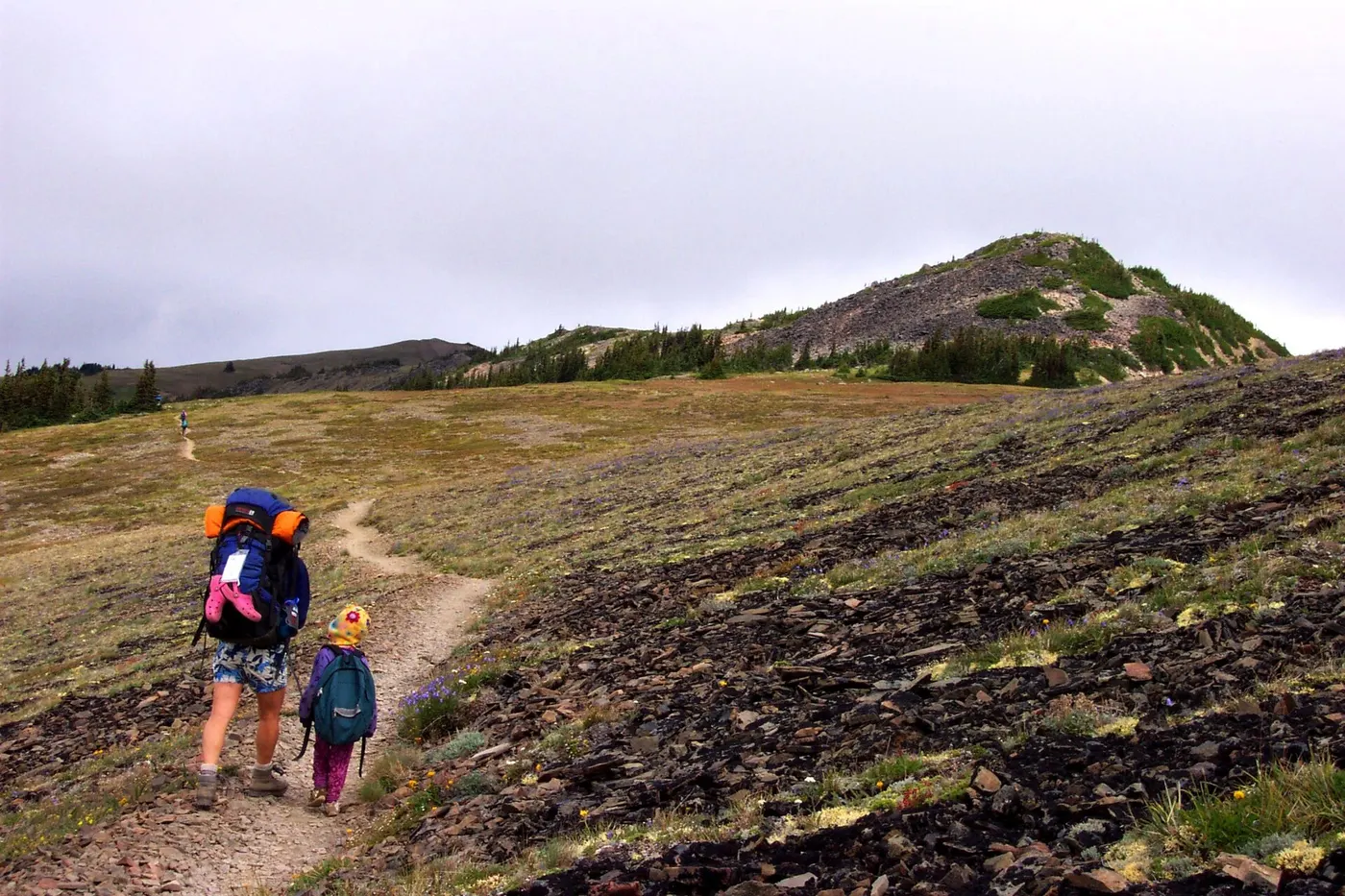
Pack weight arguments usually happen between two people comparing tents, which is the wrong comparison. The load splits into two different problems: the things you carry whether or not you use them, and the things you consume as you go.
This guide separates those two, puts an example 3-day load on paper, and then cuts it in order of what each cut actually buys. Every mass below is an example used to show the arithmetic. Weigh your own and the shape of the answer will be the same while the numbers differ.
Weigh it before you argue about it
A kitchen scale and 20 minutes replaces every opinion in this subject. Weigh each item once, write the figure on a list, and keep the list. It does not change between trips, so the work is done once and consulted for years.
Published weights are not a substitute. Manufacturers quote minimum trail weight, which often excludes stakes, guy lines and the stuff sack, and a tent that lists 1.8 kg can reach the trailhead at 2.3 kg once everything that came in the box is inside the bag.
The list also exposes the surprises. In most packs the single heaviest item after the big three is neither a tool nor a layer: it is a container, a battery pack or a book. Those are the cuts that cost nothing in comfort, and nobody finds them without a scale.
- Weigh every item individually, including the stuff sacks, and write it down
- Weigh the tent as it leaves the house, with pegs, guy lines and bag
- Record food by the day rather than as one number
- Weigh the full pack at the door and compare it against your list
- Keep the list between trips and update one line at a time
Base weight and consumables are two different problems
Base weight is everything you carry from the first step to the last: shelter, sleep system, pack, cooking kit and worn-spare clothing. On this guide's example that is a 2.1 kg tent, a 1.1 kg bag, a 0.5 kg pad, a 1.5 kg pack, a 0.5 kg stove and pot, and 1.3 kg of clothing, which totals 7.0 kg.
Consumables are food, fuel and water, and they fall as you walk. The example carries 700 g of food a day for 3 days, which is 2.1 kg, and 2 L of water, which is 2 kg. Together that is 4.1 kg, giving a starting load of 11.1 kg.
Expressed as shares, the base is 63% of the starting load and the consumables are 37%. By the final morning the consumables are nearly gone, so the base weight is the number that describes most of the trip and the only one worth spending money to reduce.
| Item | Mass | Share of 11.1 kg |
|---|---|---|
| Tent with pegs and guy lines | 2.1 kg | 19% |
| Sleeping bag | 1.1 kg | 10% |
| Sleeping pad | 0.5 kg | 5% |
| Pack itself | 1.5 kg | 14% |
| Stove, fuel canister and pot | 0.5 kg | 5% |
| Spare and insulating clothing | 1.3 kg | 12% |
| Base weight subtotal | 7.0 kg | 63% |
| Food, 700 g a day for 3 days | 2.1 kg | 19% |
| Water, 2 litres carried | 2.0 kg | 18% |
| Starting load | 11.1 kg | 100% |
Shares are each row divided by 11.1 kg and rounded. The masses are examples used to show the method; substitute your own measured figures.
Water is the heaviest thing you choose to carry
A litre of water is a kilogram, and it is the only item in the pack whose weight you reset several times a day. Carrying 3 L where the route crosses water every 2 hours is carrying 2 kg further than necessary, which is 18% of the example load.
The decision is a route question rather than a gear question. Read the map for crossings before you fill, and carry the gap between them plus a margin rather than carrying the day. A filter or treatment tablets weigh under 100 g and convert every crossing into a refill point.
The same logic applies to fuel. A canister carried for a 3-day trip that boils twice a day is mostly unburned mass at the end; weigh the partly used canister before a short trip rather than taking the full one automatically.
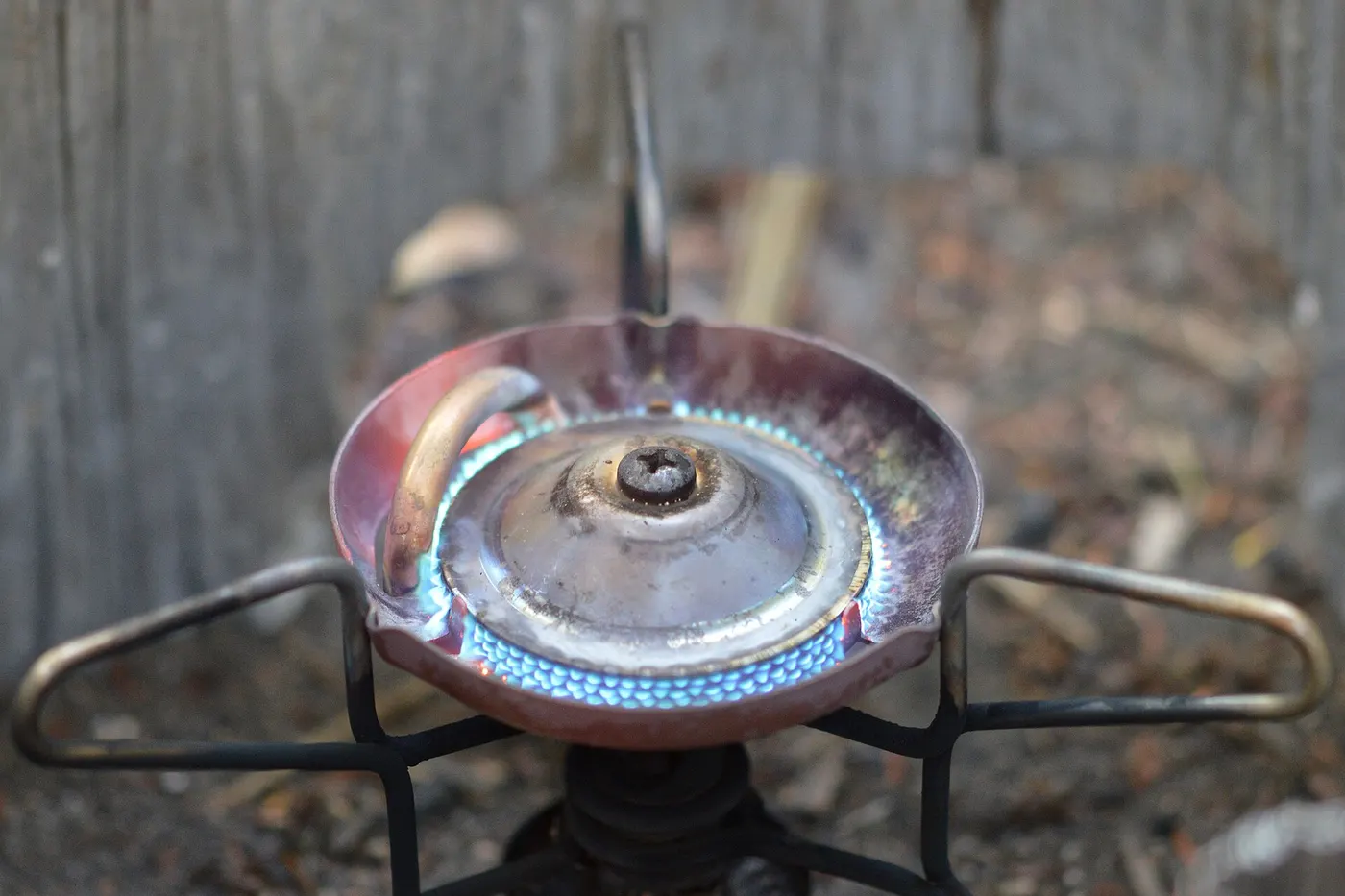
The stove decision is a fuel decision, and it stays outside
Stove choice looks like a weight comparison between burners and is really a comparison of fuel mass across the trip length. A heavier, more efficient burner that uses less fuel wins on longer trips; a lighter burner wins on short ones. The crossover sits at the point where the fuel saved exceeds the burner's extra mass.
Whatever you choose, it runs outside the tent. Health Canada's guidance on preventing carbon monoxide exposure says never to operate outdoor equipment that uses fuel, charcoal or wood inside a home, vehicle, garage or shed, camper or tent. Carbon monoxide has no smell, no colour and no taste, so there is no warning before the symptoms.
That makes a tarp, not a smaller stove, the item to add if you expect to cook in rain. It costs a few hundred grams and removes the temptation entirely.
What to cut, in order of what the cut buys
Rank the cuts by percentage of the starting load so that effort goes where it pays. Dropping a litre of water where the route allows it removes 1 kg, which is 9% of the example load, and costs nothing. Taking one fewer day's surplus food removes 700 g, or 6.3%.
Shaving 500 g off the tent removes 4.5% of the load and typically costs several hundred dollars. Shaving 300 g off the pack removes 2.7%. Those are real reductions, but they sit below the two free ones, which is the whole argument for doing the arithmetic before shopping.
Below about 5% of the load, individual items stop being worth separate decisions and the question becomes how many of them there are. Five items at 100 g each is the same 4.5% as the expensive tent upgrade, and removing them is free.
| Cut | Mass removed | Share of the load | What it costs |
|---|---|---|---|
| Carry 1 L less water between crossings | 1.0 kg | 9.0% | Nothing, if the route allows it |
| One fewer day of surplus food | 0.7 kg | 6.3% | Nothing, with accurate planning |
| Lighter tent, 500 g saved | 0.5 kg | 4.5% | A substantial purchase |
| Five small items at 100 g each | 0.5 kg | 4.5% | Nothing |
| Lighter pack, 300 g saved | 0.3 kg | 2.7% | A substantial purchase |
| Partly used fuel canister instead of a full one | 0.1 kg | 0.9% | Nothing, with a scale |
Share is mass removed divided by 11.1 kg. The first two rows and the fourth are free; the pack-weight calculator on this site shows the same ranking for your own measured list.
Before you buy
- Weigh every item once and keep the list between trips
- Separate the list into base weight and consumables before judging anything
- Write food in by the day so one day can be removed cleanly
- Read the route for water crossings and carry the gap, not the day
- Weigh a part-used fuel canister rather than defaulting to a full one
- Rank possible cuts by share of the starting load before spending anything
- Cook outside the tent in every weather, and pack a tarp if that is a problem
Questions readers ask
- Is there a correct pack weight as a share of body weight?
- No Canadian government source publishes one, and this site will not invent a figure to fill the gap. What is useful instead is the split above: get the base weight down, because it is the part you carry for the whole trip, and let the consumables be whatever the route and the days require.
- Should I weigh food wet or dry?
- As it goes into the pack, which for most trips means dry. The 700 g a day in the example is packed mass, not nutritional planning, and it is deliberately generous so it can be cut. Record it by the day rather than as one number so you can see immediately what one fewer day removes.
- How much does the pack itself matter?
- At 1.5 kg it is 14% of the example load, which puts it third behind the tent and the water. A lighter pack that carries the load badly transfers weight to your shoulders, which feels heavier than the mass it saved. Fit comes before mass for the pack, and only for the pack.
- Why not just buy lighter versions of everything?
- Because the ranking above says the two free cuts are worth more than the two expensive ones. A litre of water and a surplus day of food together remove 1.7 kg, or 15.3% of the starting load, for nothing. The tent and pack upgrades together remove 0.8 kg, or 7.2%, for a large sum.
Sources
- Health Canada — carbon monoxide: preventing exposure, including tents and campers — checked 2026-11-03
- Tents Regulations (SOR/2024-217), registered 8 November 2024, incorporating CAN/CGSB-182.1-2020 — checked 2026-11-03
- Environment and Climate Change Canada — wind chill and the Wind Chill Index — checked 2026-11-03
Some links on this site can earn us a commission. That does not change which product a guide recommends, and it adds nothing to your price. Advertising is not enabled on this site yet. When it is, ads will be labelled and kept visually separate from the guides.